
Your Garage Door Springs Are Doing More Work Than You Think
Every time you open or close your garage door, the springs are doing the heavy lifting — literally. A standard two-car garage door can weigh between 150 and 250 pounds, and the springs are responsible for counterbalancing all of that weight. Without them, your garage door opener couldn't move the door at all.
Given how much stress they're under, it's no surprise that springs are one of the most common garage door components to wear out. But most homeowners in Stuart don't think about their springs until something goes wrong — and by then, they're stuck with a door that won't open or, worse, a dangerous situation.
Here's what you need to know about garage door spring lifespan, when to replace them, and how to stay ahead of a breakdown.
How Long Do Garage Door Springs Last?
The lifespan of a garage door spring is measured in cycles. One cycle equals one full open and one full close. Most standard torsion springs are rated for approximately 10,000 cycles, which translates to roughly 7 to 10 years of typical use.
However, that estimate depends on several factors:
- How often you use the door: If your garage door is your primary entry point and you're opening it four or more times a day, your springs will wear out faster.
- Spring quality: Budget springs may only last 5,000 to 7,000 cycles, while high-cycle springs rated for 25,000 or even 50,000 cycles are available for homeowners who want longer-lasting performance.
- Climate and humidity: Living in Stuart means your springs are exposed to salt air and high humidity year-round, which accelerates corrosion and can shorten their lifespan.
- Maintenance history: Springs that are regularly lubricated and inspected tend to last longer than neglected ones.
Torsion Springs vs. Extension Springs
There are two main types of garage door springs, and each has a different lifespan and failure pattern.
Torsion Springs
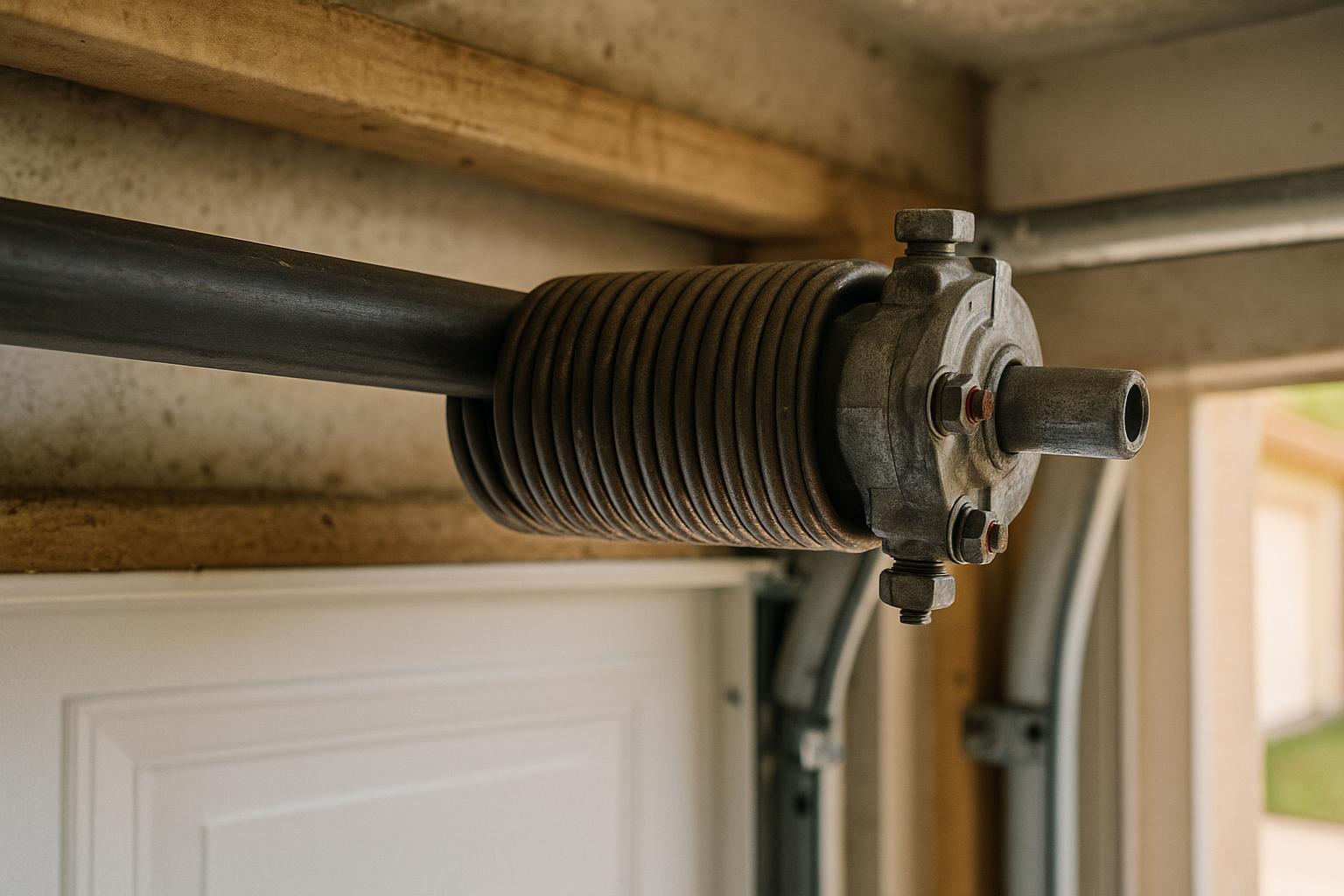
Torsion springs are mounted horizontally above the garage door opening. They use torque to lift the door and are the more common type found in modern garage door systems. They tend to last longer, operate more smoothly, and are generally considered safer than extension springs.
Extension Springs
Extension springs run along the horizontal tracks on both sides of the door. They stretch and contract to assist with door movement. Extension springs are more common in older homes and lighter doors. They're typically less expensive but have a shorter lifespan and can be more dangerous when they break if safety cables aren't installed.
If your home in Stuart or the surrounding Treasure Coast area still has extension springs, it may be worth upgrading to torsion springs during your next replacement for improved safety and longevity.
Warning Signs Your Springs Are Wearing Out
Springs rarely fail without warning. Here are the signs that your garage door springs are nearing the end of their life:
- The door feels heavier than usual: If you disconnect the opener and try to lift the door manually, it should move easily. If it feels extremely heavy or won't stay open on its own, the springs are losing tension.
- The door opens unevenly: If one side of the door rises faster than the other, one spring may be weaker or already broken.
- Visible gaps in the spring coils: A healthy torsion spring has tightly wound coils. If you notice a visible gap or separation, the spring has likely snapped.
- Loud bang from the garage: A broken torsion spring releases a tremendous amount of energy and often produces a loud sound that homeowners sometimes mistake for something falling or an intruder.
- The opener struggles or stops working: Your garage door opener is designed to work with the assistance of springs. When springs fail, the opener has to bear the full weight of the door, which can cause it to strain, overheat, or stop functioning entirely.
- Jerky or shaky movement: If the door moves in a jerky, uneven motion instead of gliding smoothly, worn springs could be the cause.
Can You Replace Garage Door Springs Yourself?
This is one of the most common questions we get, and the answer is a strong no — at least not safely. Garage door springs are under extreme tension. A torsion spring that snaps or is improperly handled during replacement can cause serious injury or even death.
Professional garage door technicians have the tools, training, and experience to replace springs safely. At Stuart Garage Door Experts, we handle spring replacements throughout Stuart, Palm City, Jensen Beach, Port St. Lucie, Hobe Sound, and Indiantown, and we always recommend leaving this particular job to the pros.
Should You Replace Both Springs at the Same Time?
If your garage door uses two torsion springs and one breaks, we strongly recommend replacing both at the same time. Here's why:
- Both springs have the same age and wear: If one has failed, the other is likely close behind. Replacing just one means you'll probably need another service call within months.
- Balanced performance: New springs on both sides ensure even tension and smooth operation, which also protects your opener from unnecessary strain.
- Cost savings: The labor cost is the same whether you're replacing one spring or two. You'll save money in the long run by doing both at once.
How to Extend the Life of Your Garage Door Springs
While springs will eventually wear out no matter what, there are steps you can take to maximize their lifespan:
- Lubricate the springs regularly: Apply a silicone-based or white lithium garage door lubricant to the springs every three to four months. This reduces friction and helps prevent rust — especially important in Stuart's humid, coastal climate.
- Schedule annual maintenance: A professional tune-up includes spring inspection, balance testing, lubrication, and hardware tightening. It's the single best thing you can do to prevent unexpected failures.
- Invest in high-cycle springs: If you use your garage door frequently, ask about high-cycle springs during your next replacement. They cost more upfront but can last two to three times longer than standard springs.
- Keep an eye on balance: Disconnect your opener and manually lift the door halfway. If it stays in place, the springs are balanced. If it falls or rises, it's time for an adjustment.
Don't Wait for a Breakdown
A broken garage door spring is more than an inconvenience — it can leave your home unsecured, trap your car inside, and put your family at risk. The best approach is a proactive one. If your springs are more than seven years old or you're noticing any of the warning signs above, it's time to have them inspected.
Stuart Garage Door Experts provides fast, affordable spring replacement and maintenance services across the Treasure Coast. Whether you need an emergency repair or want to get ahead of a problem, we're here to help. Give us a call to schedule an inspection and keep your garage door running safely all year long.