
When Your Garage Door Starts Talking, You Should Listen
You press the button on your garage door opener, and instead of the smooth, quiet operation you're used to, you hear something unsettling — a grinding, squealing, rattling, or banging sound that definitely wasn't there before. If this sounds familiar, you're not alone. Noisy garage doors are one of the most common complaints we hear from homeowners across Stuart and the Treasure Coast.
The good news is that most garage door noises are your door's way of telling you something specific is wrong. The bad news is that ignoring those sounds usually leads to bigger, more expensive problems down the road. In this guide, we'll break down the most common garage door noises, what causes them, and what you should do about each one.
Grinding or Scraping Sounds
A grinding or scraping noise is one of the more alarming sounds a garage door can make. It often sounds like metal dragging against metal, and it's hard to ignore.
Common Causes
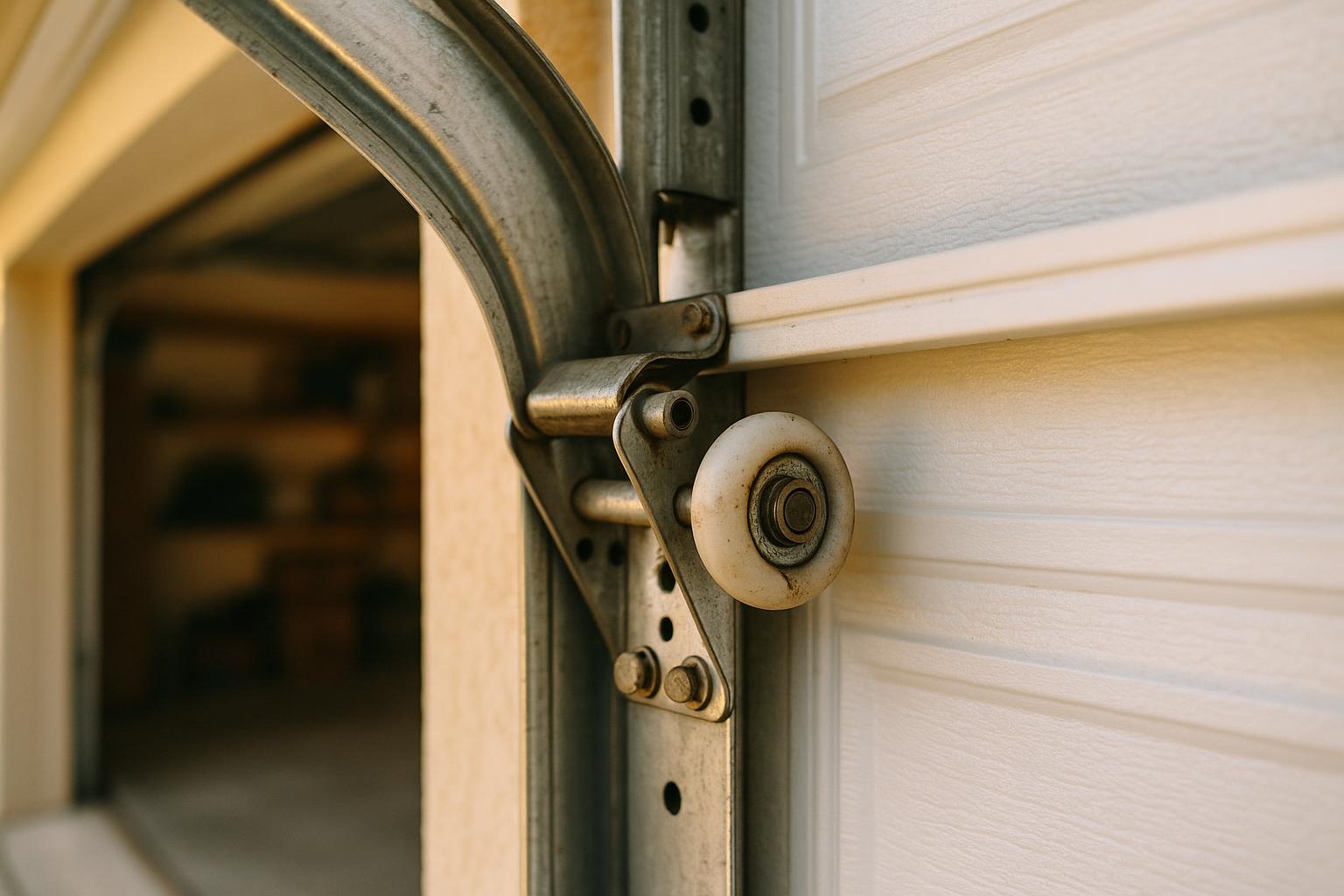
- Worn rollers: Steel rollers wear down over time and can start grinding against the track. This is especially common in older garage doors that still use metal rollers instead of nylon ones.
- Misaligned tracks: If the vertical or horizontal tracks have shifted even slightly, the door can scrape against them as it moves up and down.
- Lack of lubrication: Moving parts that haven't been lubricated in a while create friction, which produces that unmistakable grinding sound.
What to Do
Start by visually inspecting the rollers and tracks. If the rollers look worn, cracked, or chipped, they need to be replaced. Track misalignment is something we recommend leaving to a professional, since adjusting tracks improperly can cause the door to come off its rails entirely. For lubrication, a silicone-based garage door lubricant applied to the rollers, hinges, and tracks can often quiet things down immediately.
Squealing or Squeaking Noises
High-pitched squealing or squeaking is probably the most common garage door noise homeowners in Stuart deal with, and it's often the easiest to fix.
Common Causes
- Dry hinges and bearings: The hinges that connect your door panels and the bearings in your rollers need regular lubrication to operate quietly.
- Worn torsion spring coils: As torsion springs age, the coils can begin to rub against each other and produce a squealing noise during operation.
- Old or corroded hardware: Stuart's coastal humidity and salt air accelerate corrosion on metal components, which creates friction and noise.
What to Do
Apply a garage door-specific lubricant to all moving parts, including hinges, rollers, springs, and the bearing plates at the top of the door. If the squealing persists after lubrication, the issue may be deeper — worn bearings inside the rollers or aging springs that need professional attention. Living near the coast means your garage door hardware works harder against the elements, so regular maintenance is especially important here.
Rattling or Vibrating Sounds
If your garage door sounds like it's shaking apart every time it opens or closes, you're likely dealing with a rattling or vibrating issue.
Common Causes
- Loose hardware: Nuts, bolts, and screws throughout the door system can loosen over time due to the constant vibration of daily use.
- Loose chain or belt on the opener: If you have a chain-drive opener, a loose chain will slap and rattle during operation. Belt-drive openers can develop similar issues if the belt loses tension.
- Unsecured opener mounting: The garage door opener itself can vibrate against the ceiling if the mounting brackets or supports have loosened.
What to Do
Grab a socket wrench and tighten all visible nuts and bolts on the door's hinges, track brackets, and roller brackets. Check the opener's chain or belt tension according to the manufacturer's instructions — most chains should have about half an inch of play. If the opener unit itself is vibrating, make sure the mounting hardware is secure and consider adding vibration-dampening pads between the opener and the ceiling bracket.
Banging or Popping Sounds
A loud bang or pop during operation is the noise that tends to worry homeowners the most, and for good reason — it can sometimes indicate a serious issue.
Common Causes
- Torsion spring issues: A loud bang that happens once and leaves your door inoperable almost always means a torsion spring has broken. This is a serious repair that requires professional service.
- Panel problems: Warped or damaged panels can pop or bang as they move through sections of the track where they don't fit properly.
- Opener force settings: If the opener's force settings are too high, the door can slam into the floor or the stop bracket with a bang at the end of its travel.
What to Do
If you heard a single loud bang and your door won't open, do not attempt to operate the door — you likely have a broken spring, and this is a dangerous repair that should only be handled by a trained technician. For recurring banging at the top or bottom of the door's travel, adjusting the opener's limit and force settings can often solve the problem. Check your owner's manual or contact a professional for help with these adjustments.
Why Stuart's Climate Makes Maintenance Essential
Homeowners in Stuart, Palm City, Jensen Beach, and throughout the Treasure Coast face unique challenges when it comes to garage door maintenance. The combination of high humidity, salt air, intense heat, and seasonal storms accelerates wear on every component of your garage door system. Metal parts corrode faster, lubricants break down more quickly, and weatherstripping deteriorates sooner than it would in drier climates.
That's why we recommend scheduling professional garage door maintenance at least once a year — ideally before hurricane season when you need your door operating at its best. A thorough maintenance visit includes lubricating all moving parts, tightening hardware, inspecting springs and cables for wear, testing the balance and alignment of the door, and checking the safety features on your opener.
When to Call a Professional
Some garage door noises point to simple fixes you can handle yourself with a can of lubricant and a wrench. Others signal problems that require professional tools, training, and experience to repair safely. Here's a quick rule of thumb:
- DIY-friendly: Lubricating moving parts, tightening loose bolts, adjusting opener settings
- Call a pro: Broken springs, damaged cables, misaligned tracks, roller replacement, panel damage, or any noise you can't identify
Garage door springs and cables are under extreme tension and can cause serious injury if handled incorrectly. When in doubt, it's always safer and more cost-effective in the long run to call an experienced garage door technician.
Don't Ignore the Warning Signs
Your garage door is the largest moving part of your home, and strange noises are its way of asking for help. Addressing these sounds early almost always saves you money compared to waiting until a small issue becomes a major failure. Whether you're in Stuart, Hobe Sound, Port St. Lucie, or Indiantown, Stuart Garage Door Experts is here to diagnose the problem, explain your options, and get your door running quietly and reliably again. If your garage door is making a noise that has you concerned, don't wait — give us a call and let's take care of it before it gets worse.