
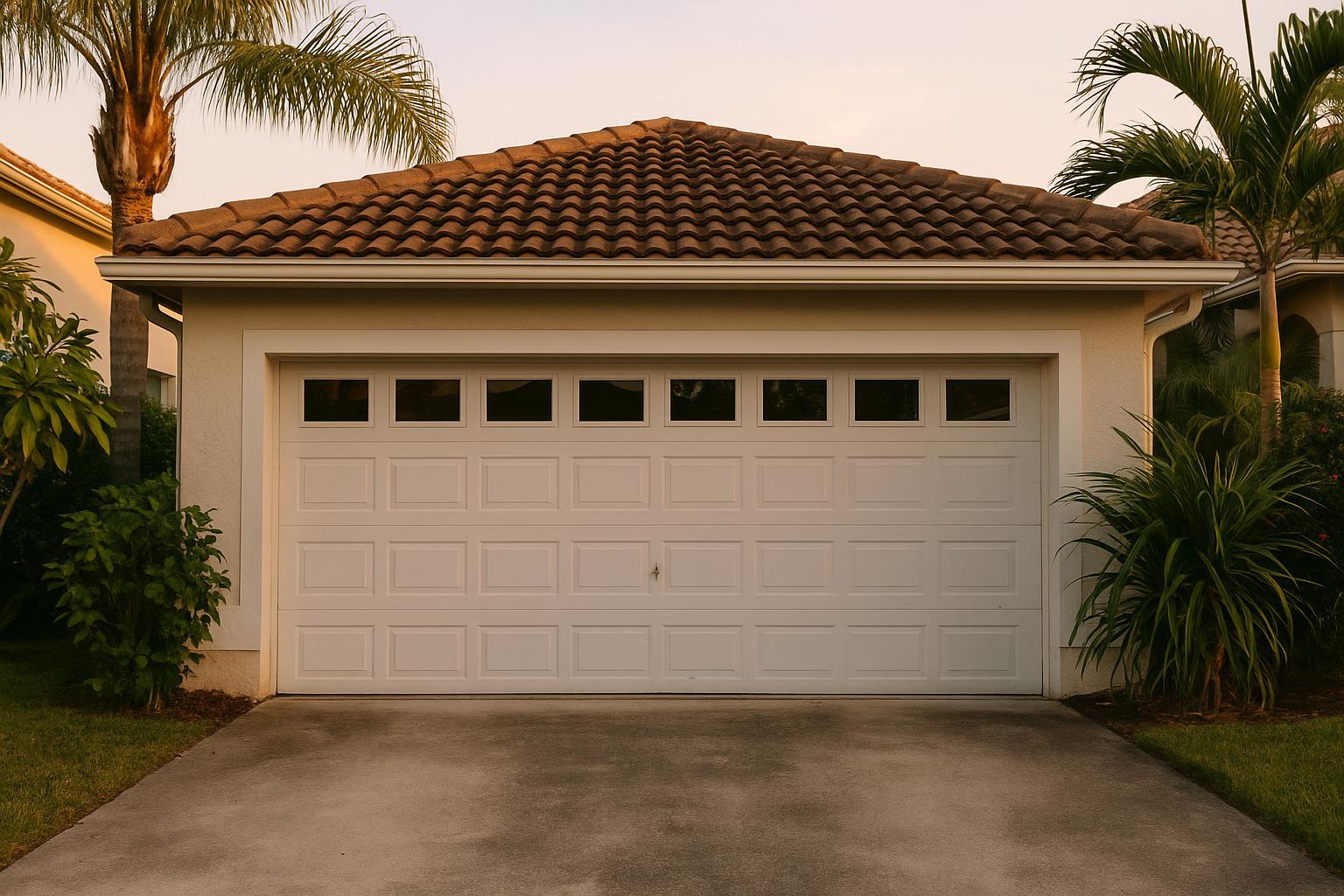
You're Running Late and Your Garage Door Won't Budge
It's 7:15 in the morning. You've got your coffee, your keys, and exactly enough time to make it to work. You press the garage door opener button and… nothing. Or maybe the motor hums but the door doesn't move. Or it lifts a few inches and stops.
This is one of the most common garage door complaints we hear from homeowners across Stuart, and it always seems to happen at the worst possible time. The good news is that many causes are straightforward, and some you can even troubleshoot yourself before calling a professional.
Check the Obvious First: Power and Batteries
Before you assume the worst, start with the basics. A surprising number of garage door emergencies come down to something simple:
- Dead remote batteries: If your wall-mounted button works but your remote doesn't, swap the batteries. This is the number one cause of morning garage door panic.
- Power outage or tripped breaker: Check whether your garage door opener is plugged in and whether the circuit breaker has tripped. Florida storms can knock out power overnight without you realizing it.
- Locked mode engaged: Some openers have a lock or vacation mode that disables the remote. Check your wall console for a lock button or indicator light.
These quick checks take less than two minutes and solve the problem more often than you'd expect.
The Door Is Off Its Tracks
If your garage door looks crooked, has a visible gap on one side, or makes a grinding metal sound when you try to open it, the door may have come off its tracks. This can happen due to:
- An impact — someone bumped the door with a vehicle or heavy object
- Worn or loose track brackets
- Broken cables that allowed the door to shift
Do not try to force a garage door that's off its tracks. The door is extremely heavy, and forcing it can cause further damage or create a serious safety hazard. This is a situation where you need a professional to realign the tracks and inspect the cables and hardware.
Broken Springs: The Most Common Culprit
If your garage door opener runs but the door barely lifts — or doesn't lift at all — there's a strong chance you have a broken spring. Torsion springs do the heavy lifting for your garage door, and when one snaps, the opener motor simply can't handle the full weight of the door on its own.
Here's how to check: look at the torsion spring mounted above the door on the inside of your garage. If you see a visible gap or separation in the coil, the spring is broken.
Why Springs Break Overnight
Homeowners in Stuart often ask us why their spring broke in the middle of the night. You may have even heard a loud bang. Springs are under constant tension, and temperature changes — even the relatively mild overnight drops we get along the Treasure Coast — can cause a weakened spring to finally give out. Metal fatigue builds over thousands of cycles, and the break can happen at any time, whether the door is in use or not.
Spring replacement is not a DIY job. The tension involved is dangerous, and improper installation can lead to injury or further damage to your garage door system.
The Photo Eyes Are Blocked or Misaligned
Modern garage doors have safety sensors — small photo eye units mounted near the floor on either side of the door opening. If these sensors are blocked, dirty, or misaligned, your door may refuse to close or may not operate at all, depending on your opener model.
Check for:
- Cobwebs, dirt, or debris covering the sensor lenses
- One or both sensor lights blinking instead of glowing steady
- Sensors that have been bumped out of alignment
Gently wipe the lenses with a clean cloth and make sure both sensors are pointed directly at each other. If the indicator lights return to a steady glow, try operating the door again.
Your Opener's Logic Board May Have Failed
Garage door openers contain a circuit board — sometimes called a logic board — that controls all the opener's functions. Power surges, lightning strikes, and simple age can cause these boards to fail. In Stuart and the surrounding areas like Palm City and Jensen Beach, summer storms are a regular occurrence, and surge damage to garage door openers is something we see frequently.
Signs of a logic board failure include:
- The opener lights flash but the motor doesn't engage
- The remote and wall button both fail to activate the door
- The opener behaves erratically — opening or closing on its own, or stopping at random points
A qualified technician can diagnose whether the board needs replacement or whether a full opener replacement makes more sense based on the age and condition of your unit.
Humidity and Corrosion: A Florida Factor
Living near the coast has its perks, but salt air and humidity are tough on garage door hardware. Homeowners in Hobe Sound, Jensen Beach, and other waterfront communities often deal with accelerated corrosion on springs, tracks, hinges, and cables. Rust weakens metal components and can cause them to seize up or fail without much warning.
Regular lubrication and annual maintenance inspections go a long way toward preventing a morning surprise. A professional maintenance visit typically includes lubricating all moving parts, tightening hardware, inspecting springs and cables, testing the balance of the door, and checking the opener's safety features.
What to Do Right Now If You're Stuck
If your garage door won't open and you need to get your car out, most garage door openers have a manual release — a red handle hanging from a cord near the opener rail. Pulling this handle disconnects the door from the opener so you can lift it manually.
- Make sure the door is fully closed before pulling the release
- Pull the red emergency release handle down and toward the door
- Lift the door manually from the bottom — it should move freely if the springs are intact
- If the door is too heavy to lift by hand, do not force it — the springs are likely broken
Once you've gotten your car out and handled your morning obligations, give us a call. We offer prompt service throughout Stuart, Port St. Lucie, Indiantown, and the entire Treasure Coast area.
Prevention Beats Emergency Repairs
The best way to avoid a garage door emergency is to stay ahead of problems with routine maintenance. Most garage door issues give warning signs — unusual sounds, slow operation, visible wear on springs or cables — well before a complete failure. Scheduling an annual tune-up helps catch these issues early and keeps your garage door operating reliably through every season.
At Stuart Garage Door Experts, we help homeowners keep their garage doors in top shape so that Monday morning stays on schedule. Whether you need an emergency repair or want to set up a maintenance plan, we're here to help.