
That Frustrating Moment When Your Garage Door Won't Stay Closed
You press the button on your garage door remote, watch the door glide downward, and then — just before it reaches the floor — it stops and reverses back up. You try again. Same thing. Maybe it works on the third attempt, maybe it doesn't. Either way, you're standing in your driveway in the Stuart heat wondering what went wrong.
This is one of the most common garage door complaints we hear from homeowners across the Treasure Coast. The good news is that in most cases, the cause is identifiable and fixable. The bad news is that ignoring it can lead to bigger problems down the road — including security risks and more expensive repairs.
Let's walk through the most likely reasons your garage door reverses before closing completely and what you can do about each one.
Understanding Your Garage Door's Safety Reversal System
Before we get into specific causes, it helps to understand why your garage door is designed to reverse in the first place. Federal law has required garage door openers manufactured after 1993 to include two safety features:
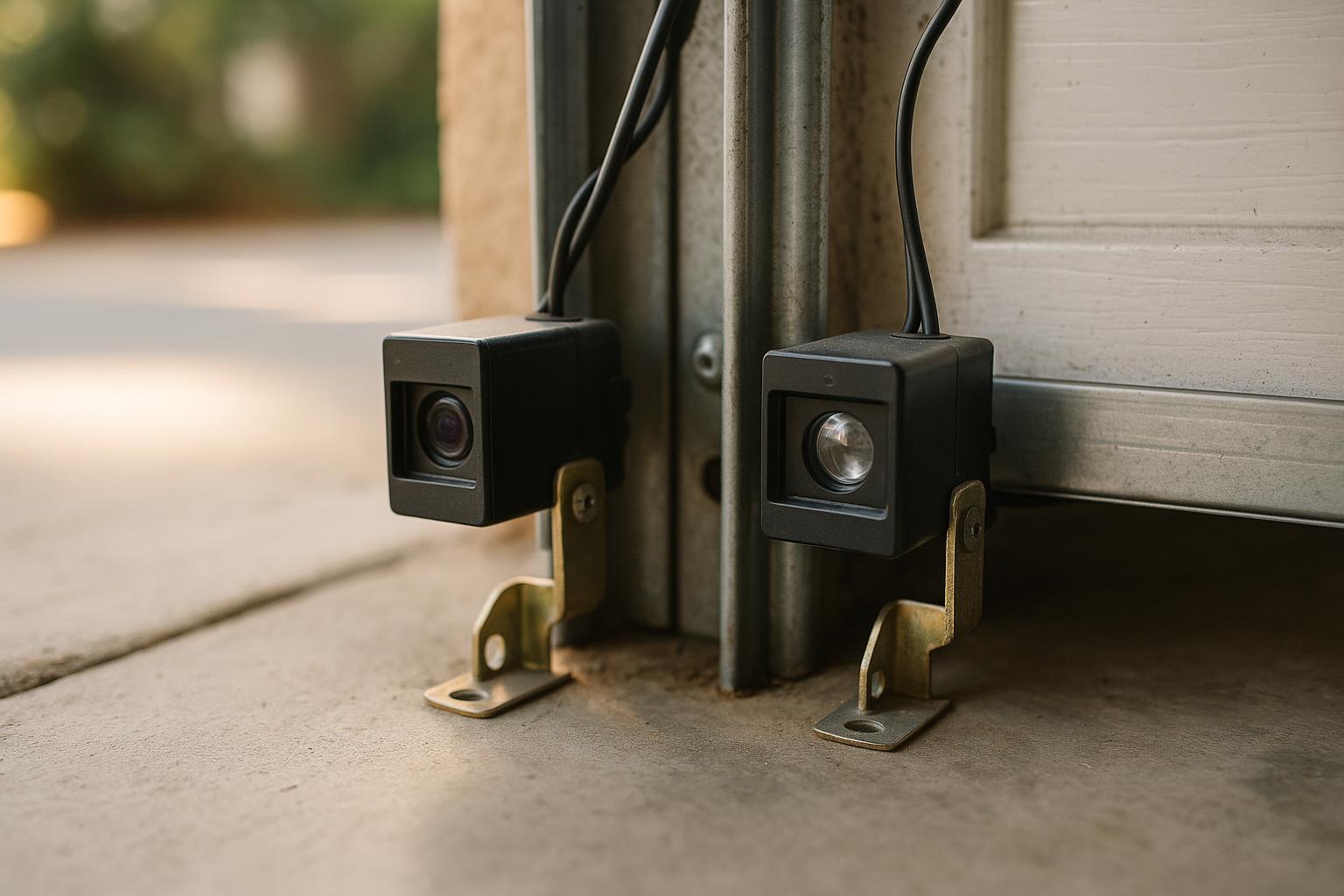
- Photo-eye sensors: Two small sensors mounted near the bottom of your garage door tracks that project an invisible beam across the opening. If anything breaks that beam, the door reverses.
- Auto-reverse mechanism: If the door encounters physical resistance while closing, it automatically reverses direction to prevent injury or damage.
These features exist to protect your family, pets, and property. So when your door reverses unexpectedly, it's actually doing its job — it just thinks something is in the way when nothing is.
Cause #1: Misaligned or Dirty Photo-Eye Sensors
This is the number one reason garage doors reverse prematurely, and it's often the easiest to fix. The photo-eye sensors on either side of your garage door opening need to be perfectly aligned and free of obstructions to work properly.
Here in Stuart, our humid subtropical climate creates unique challenges. Salt air from the coast can cause corrosion on sensor housings. Dust, spider webs, and condensation from our frequent afternoon rain showers can block the sensor lenses. Even lawn clippings kicked up by a mower can coat the sensors enough to trigger a false reading.
What You Can Do
- Gently wipe both sensor lenses with a soft, dry cloth.
- Check that both sensors have a steady green or amber light (a blinking light usually indicates misalignment).
- Make sure nothing — garden tools, trash cans, bikes — is blocking the beam path.
- Verify the sensors haven't been bumped or shifted. They should point directly at each other.
If cleaning and realigning the sensors doesn't solve the problem, the sensors themselves may need replacement.
Cause #2: Incorrect Close-Limit Settings
Your garage door opener has limit settings that tell it exactly how far the door should travel before it's considered fully open or fully closed. If the close-limit setting is off, the opener may think the door has hit an obstruction when it's actually just reaching the floor.
This issue often shows up after a new opener installation, a power outage, or when homeowners replace their garage door without recalibrating the opener. The door reaches the ground, the opener keeps trying to push it further, detects resistance, and triggers the auto-reverse.
What You Can Do
Most modern openers allow you to adjust the travel limits using buttons or dials on the motor unit. Your owner's manual will have specific instructions. However, if you're not comfortable making these adjustments yourself, it's a quick fix for a professional technician. Getting this setting wrong can cause the door to not seal properly at the bottom, which invites water, pests, and humidity into your garage — something Stuart homeowners definitely want to avoid.
Cause #3: Worn or Damaged Tracks
Your garage door travels along metal tracks on both sides. Over time, these tracks can develop bends, dents, or rust spots that create enough friction to trigger the auto-reverse mechanism. Even a small obstruction — a pebble lodged in the track or a section that's pulled away from the wall — can cause the door to bind and reverse.
What You Can Do
- Visually inspect both tracks from top to bottom, looking for obvious damage, debris, or gaps between the track and the wall.
- Listen for grinding or scraping sounds when the door operates — these indicate the rollers are struggling against the track.
- Do not attempt to bend or hammer tracks back into shape yourself, as improper adjustments can make the problem worse or cause the door to come off the track entirely.
Cause #4: Broken or Weakening Springs
Garage door springs bear the enormous weight of the door and assist the opener in lifting and lowering it smoothly. When springs weaken or break, the opener has to work much harder. In some cases, the added resistance is enough to trigger the safety reversal.
If your door feels unusually heavy when you try to lift it manually, or if you notice a gap in one of the torsion springs above the door, spring failure is likely the culprit. Spring replacement is one repair that should always be handled by a trained professional. These components are under extreme tension and can cause serious injury if mishandled.
Cause #5: Wiring or Logic Board Issues
Electrical problems are less common but do occur, especially in older opener units or in areas like the Treasure Coast where power surges from summer thunderstorms are a regular occurrence. Frayed wiring between the sensors and the opener, or a failing logic board inside the motor unit, can send incorrect signals that cause erratic behavior including random reversals.
If you've ruled out the mechanical causes above and your door is still reversing, it may be time to have the electrical components inspected. A surge protector for your garage door opener is a worthwhile investment for homeowners in Palm City, Jensen Beach, and throughout the Stuart area where afternoon storms are a fact of life from May through October.
When to Call a Professional
Some of these fixes — cleaning sensors, checking for obstructions — are perfectly safe for homeowners to handle. But others, particularly spring replacement, track repair, and electrical diagnostics, require the tools and experience of a trained garage door technician.
Here are some signs it's time to pick up the phone:
- The door reverses even after you've cleaned and aligned the sensors.
- You hear loud banging, popping, or grinding noises during operation.
- The door is visibly crooked or off-track.
- Springs appear damaged, stretched, or broken.
- The opener runs but the door doesn't move at all.
Keep Your Garage Door Running Smoothly in Stuart
A garage door that won't close isn't just an inconvenience — it's a security vulnerability and an open invitation for Florida's heat, humidity, and wildlife to enter your home. Most reversal issues can be resolved quickly when diagnosed correctly, and regular maintenance goes a long way toward preventing them in the first place.
At Stuart Garage Door Experts, we help homeowners and businesses across Stuart, Port St. Lucie, Hobe Sound, and the surrounding Treasure Coast communities keep their garage doors operating safely and reliably. Whether you need a quick sensor adjustment or a complete opener replacement, we show up on time and get it done right the first time.
If your garage door keeps reversing and you can't figure out why, give us a call. We'll diagnose the problem, explain your options, and have your door working properly before you know it.